SOLSTICE · LONGEST NIGHT · RETURN
Winter Solstice Rituals: The Longest Night and Returning Light
The winter solstice is an exact astronomical hinge surrounded by many cultural midwinters. A compelling ritual knows which light it measures, which inheritance it carries, and what changes at home.

STAR & SIGIL
Let the longest burden loosen before light returns
Move from gradual solstice restoration into a cataloged release working focused on the appetite that survives symbolic endings.
Open the returning-light release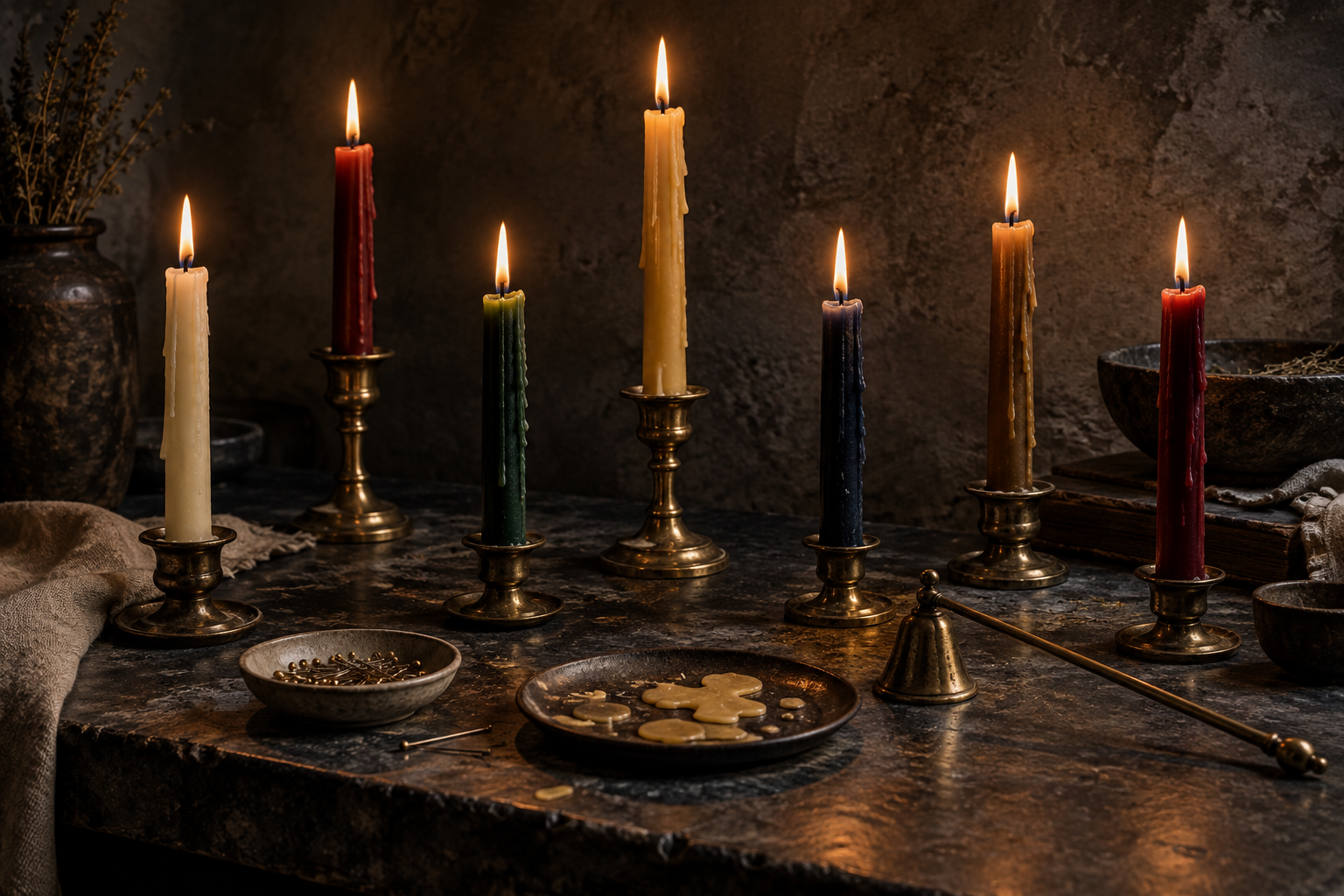
At the winter solstice, the Sun does not stop rising. What pauses is the seasonal drift of its rising and setting points: after reaching an extreme, the Sun’s path reverses direction. That measurable hinge has supported calendars, feasts, monuments, stories, and modern winter solstice rituals. It does not supply one universal ceremony.
A useful solstice observance begins by separating astronomy from inherited custom. The astronomical event is a moment, calculated for the whole Earth, when one hemisphere tilts farthest from the Sun. Midwinter celebrations are cultural responses formed in particular places. Yule, Christmas, Roman Saturnalia, Iranian Yalda, and contemporary Pagan rites may all gather around darkness and return, but they are not alternate names for one prehistoric religion.
The longest night is local, while the solstice moment is global
Earth’s axis is tilted relative to its orbit. Near the December solstice, the Northern Hemisphere leans farthest from the Sun; near the June solstice, the Southern Hemisphere does. The Sun reaches its most southerly or northerly declination, producing the year’s shortest span of daylight for the winter hemisphere. The event may fall on different civil dates depending on time zone.
“The Sun stands still” describes appearance and etymology, not a halt in the solar system. For several days, sunrise and sunset positions shift so slowly that the turning point is difficult to see without repeated observation. The earliest sunset and latest sunrise also need not occur on solstice day because clock time, latitude, and Earth’s orbital motion shape those extremes differently.
This subtlety improves ritual. Instead of demanding one dramatic dawn, a practitioner can watch a familiar shadow, doorway beam, or sunrise point across several days. The turning becomes a pattern confirmed through patience rather than a single weather-dependent spectacle.
Alignment, feast, and folklore are different forms of evidence
Neolithic monuments such as Newgrange in Ireland and Maeshowe in Orkney align with winter light, demonstrating careful attention to seasonal solar positions. Their architecture does not give us a complete spoken liturgy or identify every participant’s theology. Stone, orientation, chamber, and illumination show deliberate design; modern stories cannot fill every silence.
Roman Saturnalia occurred in December and involved feasting, gifts, altered social conventions, and public religion, but its historical dates and institutions were Roman. Old Norse jól names a midwinter feast attested through medieval sources, later interacting with Christian Christmas. Evergreen decoration, candles, wassailing, and log customs have their own regional and chronological histories.
The recurring human problem is clearer than a single lineage: darkness constrains labor, cold consumes stores, and survival depends upon hospitality and planning. Fire, food, greenery, and gathering answer those conditions directly. Similar answers can arise without descending from one original ceremony.
Night is a condition, not a moral failure
Modern solstice language often stages light as good and darkness as evil. That opposition can flatten the season. Darkness shelters sleep, gestation, privacy, memory, and astronomical sight. Winter is not dead everywhere, and dormancy is not defeat. A ritual of return can welcome increasing daylight without treating night as an enemy to conquer.
Begin with the actual household. Who works before dawn? Who lacks heat, company, or safe shelter? Who prepares the feast and cleans afterward? A symbolic candle becomes more credible when accompanied by repaired lighting, shared labor, food redistributed, or a protected interval of rest.
When the dark has entered sleep as disturbance rather than restoration, Gentle Country of Dreams protects a target’s dreams from becoming unsettling. Bring that shelter to the troubled night rather than asking symbolic darkness to do the work of rest by itself.
One flame can keep three different kinds of time
Consider three candles lit on the same December evening. One stands in a reconstructed observation beside a measured sunrise line. One burns at a family Christmas table. One is placed on a contemporary Pagan altar to welcome the returning Sun. The material action looks similar; its authority does not.
| Flame | What sets its time | What the act means |
|---|---|---|
| Observational candle | Repeated horizon or shadow measurements | Marks a verified solar reversal without claiming an inherited rite |
| Family table candle | A living religious and household calendar | Joins worship, memory, kinship, and hospitality |
| Pagan altar candle | Modern Wheel of the Year practice | Enacts chosen solar symbolism within a contemporary religion |
Moving one candle between settings changes its office. On the windowsill it may watch dawn. At the table it may remember a dead relative. On the altar it may personify a solar power. The flame’s chemistry remains combustion; its ritual meaning comes from appointment, witnesses, words, and sequence.
Suppose clouds hide sunrise. The observational rite can still compare recorded times or the noon shadow from neighboring clear days. The family rite may not depend on visibility at all. The Pagan rite can acknowledge that astronomical return occurs behind weather. A robust ritual survives because it knows which evidence it needs.
Give every symbol a material job
A light can mark the turning, illuminate a name, or make a room usable. Evergreen can represent persistence, but identify the plant and gather without damaging protected habitat. A shared meal can embody stored abundance, provided participation does not become compulsory expense. Silence can honor the longest night, provided everyone understands when it begins and ends.
Choose one scale. An astronomical observance records local daylight or shadow. A devotional rite addresses a named deity or sacred relationship. A household rite changes a practical condition. A memorial speaks to particular dead. Combining scales is possible, but each transition should be explicit rather than hidden beneath vague “ancient energy.”
The keeper of a flame appoints its hour: the room that holds it, the faces it illuminates, the threshold at which it is extinguished. A lamp can hold the same office when a household chooses light without fire. The solstice turns on the meaning given to returning light, not on the fuel that produces it.
December is not winter everywhere
For the Southern Hemisphere, the December solstice is summer and the June solstice is winter. Tropical climates may show smaller daylight changes while rainfall, heat, storms, or dry seasons govern daily life more strongly. A northern midwinter rite transplanted unchanged can obscure the conditions directly outside the door.
Practitioners can follow local astronomy, keep an ancestral calendar, or do both with clear language. Someone in Australia might mark June as winter solstice while keeping a December family Christmas. A person near the equator can observe the Sun’s seasonal path without inventing snow. Cultural memory and ecology need not compete when each clock is named.
Generosity gives light a social consequence. Fortune Before Sunset makes a generous deed blossom into visible fortune before the sun sets. Cast it where one act of giving is meant to flower on that exact solar deadline, rather than attributing the promise to the solstice itself.
What a winter solstice ritual can honestly turn
The sky offers an exact reversal, not a universal script. History offers many midwinter practices, not a single hidden original. The practitioner’s task is to choose which inheritance, observation, and household need will meet at the hinge.
The returning light matters because darkness was real, not because darkness was wrong. A well-made rite honors both conditions and turns attention toward the work that becomes possible now.