OSTARA · EOSTRE · EQUINOX
Ostara Meaning: Eostre, Equinox, and the Modern Festival
Ostara is a modern Pagan spring festival with an old name behind it, a precise solar crossing beneath it, and no surviving ancient ritual script. Its meaning grows clearer when those layers remain distinct.

STAR & SIGIL
Strip the borrowed spring story to its living truth
Continue into a cataloged revelation working while keeping Bede's fragment, Grimm's reconstruction, and modern desire visibly separate.
Unmask the story at the equinox gate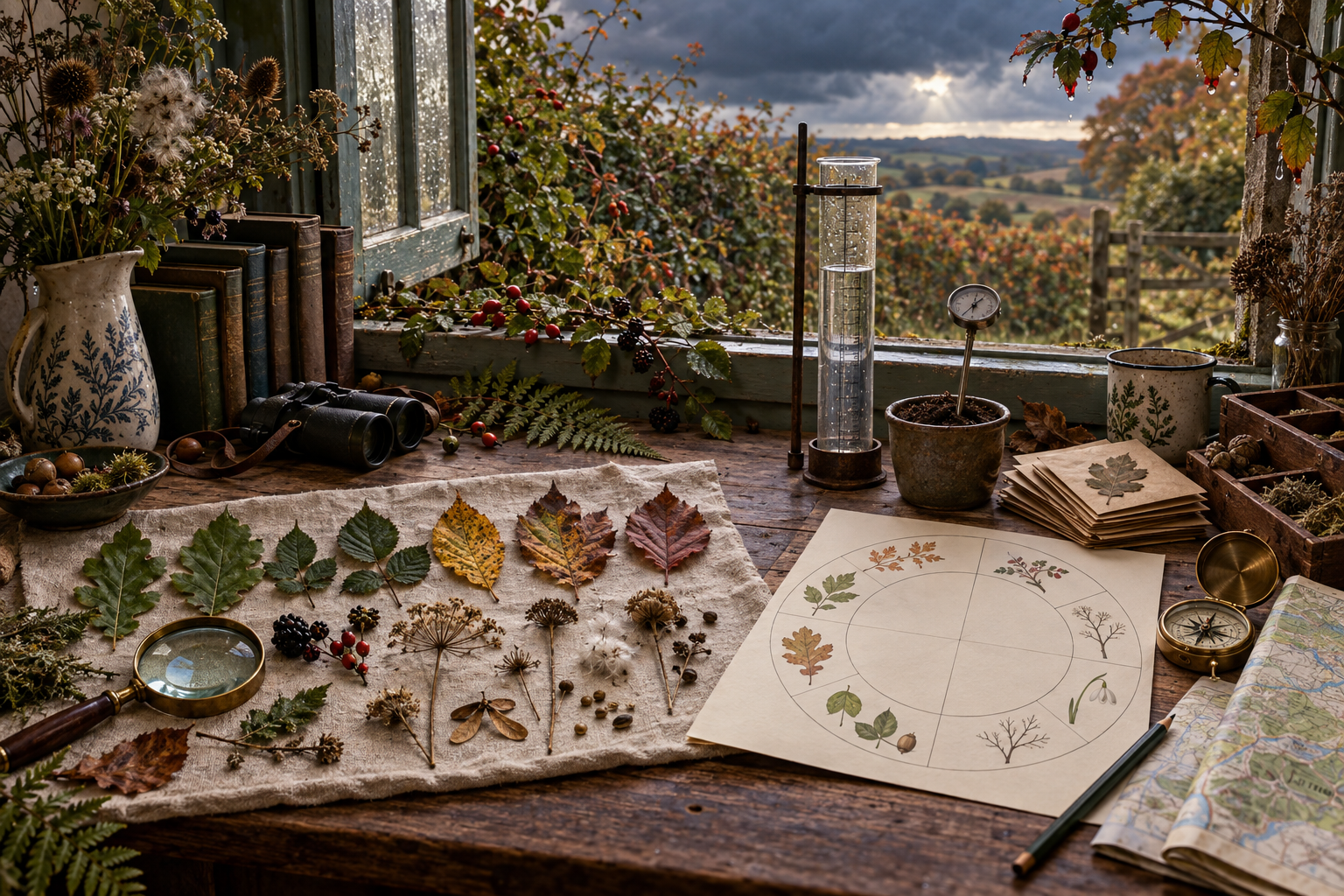
On a March morning, a gardener finds the first crocus open beneath a wall while frost still holds the shaded soil. The astronomical crossing has happened everywhere at once; spring has not. That tension is the best entrance into Ostara meaning: a modern Pagan festival can be religiously real without being an intact ceremony recovered from ancient Europe.
Ostara usually names the spring equinox festival in the modern Wheel of the Year. Its themes include emergence, increasing light, fertility, renewal, and the unstable poise between winter and summer. The name is related to a brief passage by the eighth-century Northumbrian scholar Bede about a month called Eosturmonath. That passage is valuable evidence, but it is not a ritual manual, a goddess biography, or proof of a pan-European feast.
The festival’s depth lies in learning which layer is speaking. Solar geometry supplies a crossing. Bede supplies one early English month-name and an explanation. Modern Paganism supplies Ostara as a named sabbat. A local field, street tree, or balcony supplies the season actually underway.
01 / THE NAME IN BEDE
Eosturmonath is one sentence, not a surviving liturgy
In chapter fifteen of De temporum ratione, “The Reckoning of Time,” Bede explains English month-names while discussing calendars and the computation of Easter. He says that Eosturmonath, corresponding approximately to April, was named for a goddess called Eostre, in whose honor feasts had formerly been celebrated. He then says that the Christian Paschal season was called by that familiar older name. This is the core testimony behind many discussions of Ostara.
The statement deserves neither dismissal nor inflation. Bede was an early medieval English scholar writing close enough to older naming traditions to preserve information unavailable elsewhere. Yet his notice is solitary: no surviving prayer, image, temple inventory, myth, priestly title, food list, or ritual sequence accompanies it. The plural “feasts” signals observance, but it does not reveal what participants did.
Bede’s subject also matters. He is not collecting a pagan handbook. He is explaining time-reckoning and the conversion between Roman, Christian, and vernacular calendars. His argument shows how an older name could continue after worship changed. It establishes continuity of vocabulary more securely than continuity of ceremony.
02 / FROM EOSTRE TO OSTARA
The familiar festival spelling comes through modern interpretation
The form Ostara is not the spelling in Bede. Jacob Grimm used a reconstructed continental Germanic form, Ostara, in his nineteenth-century study of German mythology, reasoning from Bede’s Eostre and German Easter vocabulary. Grimm’s proposal became culturally influential, but reconstruction is an argument about lost language and religion, not a newly discovered second eyewitness account.
Twentieth-century Witchcraft and Pagan movements then placed Ostara within an eight-festival ritual year. The Wheel of the Year joined solstices, equinoxes, and seasonal festivals into a coherent devotional cycle. Authors and communities gave the spring equinox its now-familiar Ostara name, symbolism, liturgy, and correspondences. This is the proximate history of the festival most practitioners recognize.
Calling that development modern does not make it counterfeit. Religions continually name calendars, arrange inherited materials, and create forms capable of carrying present devotion. The error begins only when the modern synthesis is projected backward as a documented rite of Eostre complete with painted eggs, hares, altar colors, and a standardized equinox ceremony.
03 / WHAT THE EQUINOX MEANS
Balance is a crossing already becoming imbalance
At the March equinox, the geometric center of the Sun crosses the celestial equator northward. Earth’s axis remains tilted; it is oriented sideways relative to the Sun at this point in the orbit. The event is an instant, not a full day, and it occurs simultaneously worldwide even though local clocks and dates differ.
“Equal night” is an elegant gloss rather than a promise that every location receives exactly twelve hours of visible daylight. Sunrise and sunset are conventionally measured at the upper edge of the solar disk, and atmospheric refraction makes the Sun appear when its geometric position is still below the horizon. Latitude, elevation, and the local horizon further alter the interval.
Ostara’s balance therefore works best as directional poise. The Sun crosses a line and immediately continues; in the Northern Hemisphere daylight is increasing, while in the Southern Hemisphere it is decreasing. The symbol is not a scale frozen forever. It is the narrow point at which a relationship changes sign.
When spring symbolism becomes a literal wish to reverse age rather than notice cyclical change, The Body's Stolen Spring gives the desire exact form. Work it to Restore an aging body to its strongest, most beautiful years. The spell’s extraordinary promise clarifies what an equinox can symbolize without claiming that the season itself makes bodies young.
04 / WORKED READING
One crossing, three records of spring
Suppose three observers keep notes for the same March equinox. Rowan stands beside a Northumbrian churchyard, Ana tends a high-elevation garden in Colorado, and Lila watches a rain tree in Manila. Their entries test what comes from the source, what comes from astronomy, and what comes from place.
| Record | What is actually observed | What Ostara can mean |
|---|---|---|
| Northumbria | Equinox sunset shifts along a familiar horizon; daffodils open; Bede’s region gives historical proximity but no recovered rite. | A modern festival can remember the Eosturmonath notice while leaving its lost feasts undescribed. |
| Colorado upland | Daylight increases, snow remains in shade, and planting soil is still frozen. | Emergence means preparation and solar direction, not pretending germination has begun. |
| Manila | Day length changes slightly; heat and dry-season stress matter more than thaw; local trees follow tropical rhythms. | The equinox can be a religious calendar point while the sensory language comes from tropical place. |
The comparison separates three kinds of authority. Bede can support a statement about an early English name and reported goddess; an ephemeris can locate the solar crossing; repeated observation can describe each ecology. None can do the others’ work. Rowan cannot turn regional proximity into ritual memory. Ana cannot command thaw by choosing spring colors. Lila need not manufacture temperate buds to honor a global astronomical event.
Now compare objects. Rowan places a copy of Bede’s month list beside a pressed local leaf, explicitly pairing textual witness with present season. Ana chooses a labeled seed packet but leaves it sealed until soil temperatures permit sowing. Lila sketches the rain tree’s canopy and notes water stress. All three create meaningful seasonal signs; none claims the object was sacred to Eostre.
05 / EGGS, HARES, AND EVIDENCE
Good symbols do not need imaginary pedigrees
Eggs suit spring because they visibly contain potential, appear in many seasonal foodways, and became important in Christian Easter customs. Hares and rabbits evoke rapid breeding, field edges, dawn movement, and modern spring imagery. These associations can carry excellent ritual meaning. They do not become artifacts of an ancient Eostre cult merely because they feel archetypal.
The modern word Easter in English and related German vocabulary invite linguistic comparison with Eostre; the histories of Pascha in many other languages show that one etymology is not a universal origin story. Likewise, the presence of eggs in Easter traditions does not by itself connect them to Bede’s goddess. Parallel seasonal symbols can converge without descending from one lost ceremony.
A mature Ostara practice asks a better question than “How ancient is this prop?” It asks what relation the symbol makes visible now. An egg may represent protected potential, nourishment, animal labor, or the cost of breaking a shell. A hare may represent quickness or ecological encounter. Meaning becomes richer when observation replaces a fabricated lineage.
06 / FERTILITY WITHOUT NARROWNESS
Fertility is the capacity to generate, not a command to reproduce
Ostara discussions often reduce fertility to human pregnancy and pair everything into gendered opposites. Seasonal productivity is broader: fungal networks fruit, insects pollinate, ideas acquire collaborators, institutions reopen, and damaged land gains a chance to support more life. Some organisms reproduce without binary pairing; many people create futures without parenthood.
This wider frame does not drain sexuality from the festival. It places erotic, agricultural, artistic, communal, and intellectual generation beside one another without forcing any participant into a reproductive role. Equinoctial balance then describes negotiated relationship, not compulsory coupling.
The fantasy of fertility without delay appears in The Moon That Commands the Furrow. Cast it to Make barren fields ripen under a single night’s moon. Its impossible speed reveals why ordinary seasonal work depends on soil, weather, labor, and duration even when ritual concentrates desire into one charged night.
Ostara means a modern threshold with an ancient name behind it
The most defensible answer to “What does Ostara mean?” is layered. It is the modern Pagan name for a spring-equinox festival; a celebration of crossing, emergence, and increasing light in its Northern Hemisphere setting; and a word shaped by the afterlife of Bede’s Eostre notice and Grimm’s reconstruction.
Its evidentiary limits are not emptiness. They are the open space in which practitioners can make honest tradition. Observe the solar direction, learn the local season, name modern inheritances as modern, and let Bede’s brief witness remain brief. A festival does not require a fictional antiquity to stand at the living edge of spring.