HEAT · TRADE · TRANSFORMATION
Magical Properties of Spices: Pepper, Cinnamon, Clove, Nutmeg, and Saffron
Pepper is fruit, cinnamon bark, clove a flower bud, nutmeg a seed, and saffron the dried stigma of a crocus. Their magic begins where the generic brown powder ends: in plant part, labor, sensory force, and the histories that made distance taste valuable.

STAR & SIGIL
Make luxury answer to bark, bud, seed, and labor
A spice correspondence sharpens when plant part, trade power, sensory form, and exposure limits stay visible.
Open the material cabinet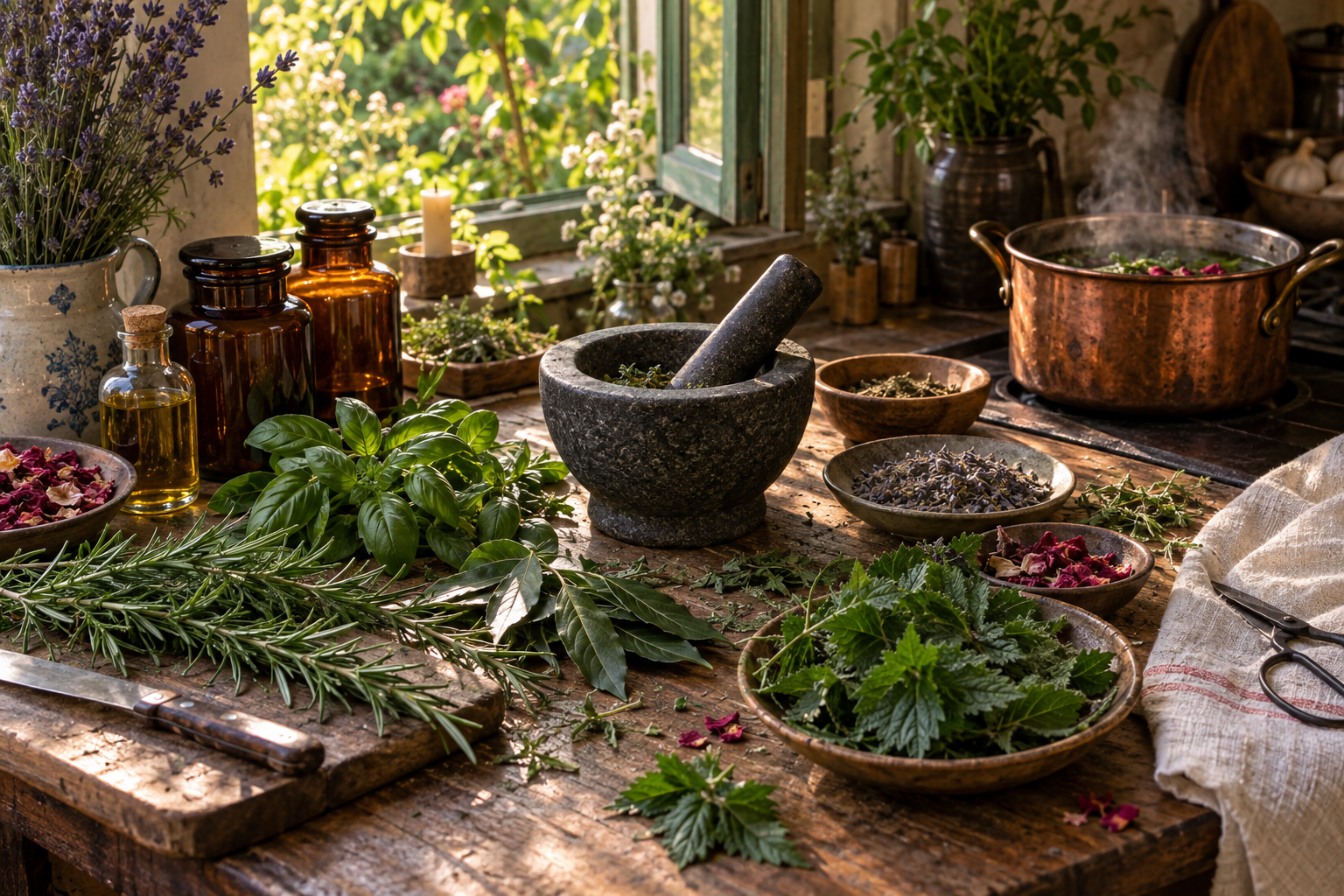
Open a spice cabinet and five continents seem to collapse into six inches of shelf. Black pepper, cinnamon, clove, nutmeg, and saffron sit close enough to be mistaken for one occult category: hot, prosperous, protective, desirable. The resemblance is manufactured by storage. In the plant, each occupies a different body and each reaches the kitchen through a different transformation.
Pepper is fruit. Cinnamon is bark. Clove is an unopened flower bud. Nutmeg is seed, while mace is its surrounding aril. Saffron is stigma harvested thread by thread. These are not trivia beneath the magic. Plant part determines the physical verb: crack, roll, fasten, enclose, concentrate.
A spice correspondence becomes trustworthy when it can explain why this material carries this power—and whose labor, land, and history made it available.
01 / FIVE BODIES
Plant part comes before planetary table
| Spice | Botanical material | Material verb | Magical tension |
|---|---|---|---|
| Black pepper | Dried fruit of Piper nigrum | Cracks and disperses | Interruption / irritation |
| Cinnamon | Inner bark of Cinnamomum species | Rolls and enfolds | Welcome / concealment |
| Clove | Dried unopened flower bud | Fastens and concentrates | Protection / command |
| Nutmeg | Seed; mace is the separate aril | Contains and divides | Luxury / consequence |
| Saffron | Dried stigmas of Crocus sativus | Threads and colors | Radiance / adulteration |
The opposing readings matter. Pepper’s capacity to interrupt can become defense or needless aggression. Cinnamon’s enfolding warmth can welcome or smother. Clove’s nail-like form can fasten a boundary or fasten a will. A material does not choose the moral direction of its verb.
Clove makes command especially vivid because the unopened bud looks poised between flower and nail. When the desired power is not momentary persuasion but an order that remains active after its speaker departs, cast The Command That Outlasts Your Presence to make someone obey a command long after you have left the room. Its severity exposes what gentler “clove for influence” language can hide.
02 / HEAT IS NOT ONE THING
Pungency, aroma, sweetness, and color work by different routes
Spice magic often calls everything “fiery.” Yet black pepper’s pungency, cinnamon’s warm-sweet aroma, clove’s intense volatile profile, nutmeg’s enclosing fragrance, and saffron’s color release are not one sensation. The body distinguishes them even when a correspondence chart does not.
Pepper becomes forceful when broken because grinding increases exposed surface. Cinnamon quills disclose layers of bark. Clove preserves the silhouette of a bud arrested before opening. Nutmeg and mace reveal two commodities nested in one fruit. Saffron measures concentration through a few fragile threads capable of changing a larger field.
These behaviors support exact offices. Pepper interrupts momentum. Cinnamon surrounds a social space. Clove fixes a charge. Nutmeg contains value with risk inside it. Saffron concentrates labor into visible radiance. None guarantees money, passion, protection, or cure.
03 / THE PRICE INSIDE THE SYMBOL
Luxury can be labor—or engineered scarcity
Spices moved through trade networks long before modern occult tables gathered them into kitchen magic. Their histories include cultivation expertise, maritime exchange, taxation, controlled production, colonial seizure, monopoly, enslavement, substitution, and fraud. Prestige is therefore evidence of power, but not always blessing.
Clove and nutmeg make the problem impossible to avoid. Their historic value attracted violent attempts to control where they grew and who could sell them. Saffron’s price reflects intensive harvest of a tiny floral part, while powdered forms invite adulteration because color can impersonate identity. Cinnamon’s commercial name can conceal different species and grades.
Wealth symbolism must ask whether value comes from skilled labor, genuine rarity, enforced scarcity, deceptive substitution, or the buyer’s desire to display distance. A golden powder is not automatically prosperous if the chain behind it makes everyone but the final merchant poor.
When wealth itself has become an enthraller’s instrument, work The Enthraller's Wealth Turns Worthless to make wealth demanded by an enthraller appear worthless to the enthralled person. The spell belongs in the spice archive because it breaks prestige at the point where costly material has been converted into obedience.
CASE FILE THE RED THREADS
The saffron contract that colored water and concealed debt
A luxury restaurant offers advance payment to a farming cooperative for an exclusive saffron crop. The sample blooms gold in water. The contract blooms less beautifully.
The buyer’s photographs center the red stigmas and describe ancestral craft. The agreement fixes a low price for five years, shifts crop failure onto growers, and permits rejection by an undefined color standard. A ceremonial signing dinner displays saffron rice as proof of partnership.
Stigma
Tiny harvested parts concentrate enormous labor.
Color
Visible radiance can distract from invisible terms.
Thread
Traceability matters from flower to package.
Price
Prestige at the table does not prove justice at origin.
THE TRADE READING
The cooperative does not ask saffron to prophesy the buyer’s honesty. It compares the sample with the clauses, obtains independent review, and refuses exclusivity without shared risk and objective standards. The spice remains precious; the first offer does not.
04 / AUTHENTICITY AND TESTIMONY
A familiar aroma cannot certify an unknown powder
Whole form can preserve clues that grinding removes, but appearance alone cannot prove identity, purity, origin, or ethical trade. Powder collapses bark, fruit, bud, seed, and stigma into surfaces easy to color and rename. The occult temptation is to let intuition repair what documentation cannot establish.
Uncertainty should remain a property of the reading. Unknown powder can symbolize opacity without being burned, tasted, scattered, or promoted into a sacred ingredient. Packaging, supplier record, species name, form, and date are not mundane enemies of magic; they are the spice’s custody trail.
Direct testimony belongs to another evidentiary layer. A merchant’s claim, grower’s account, laboratory result, and practitioner’s sensory impression answer different questions. No impressive color, aroma, or price may answer in a person’s place.
05 / THE MATERIAL KEY
What are the magical properties of spices?
Spices can signify heat, interruption, welcome, fastening, containment, concentration, luxury, appetite, protection, command, and exchange. Their exact powers depend on plant part, processing, sensory behavior, price, labor, and cultural setting. “Spice for abundance” is a category; saffron concentrating thousands of acts of harvest into a few red threads is an argument.
The cabinet’s deepest lesson is transformation under custody. Fruit is dried, bark removed and rolled, buds arrested, seed separated from aril, stigma detached from flower. Each object has already passed through skilled hands before it reaches a magical table. Respect begins by refusing to erase those hands.
A serious spice magic does not make commerce disappear beneath aroma. It lets pepper interrupt deception, cinnamon reveal what welcome encloses, clove expose command, nutmeg divide luxury from consequence, and saffron measure how much unseen labor one brilliant color can contain.
06 / THE CHAIN OF CUSTODY
Grinding increases power and destroys evidence
A whole spice preserves visible anatomy. Peppercorn retains the shape of fruit; a cinnamon quill displays rolled bark; clove still resembles bud and stem; nutmeg can be distinguished from its lacy aril; saffron remains thread. Grinding expands surface and accelerates release, but it also erases the structures by which an observer recognizes the material.
This double movement is magically important. Powder acts quickly because it disperses, yet dispersion makes boundaries harder to govern. A whole object can be counted, retrieved, labeled, and traced. Fine particles move into air, cracks, cloth, and neighboring containers. “Faster” is therefore not a neutral increase in strength. It is a transfer from custody toward diffusion.
Processing also changes the social relation. The grower may know the plant; the trader the grade; the cook the behavior in heat; the perfumer the volatile profile; the historian the route; the practitioner the private association. No single observer possesses the whole spice. Expert correspondence is built by keeping those partial knowledges adjacent without pretending they are identical.
The final test is omission. If a correspondence collapses when the spice jar is closed, the material may have been serving as atmosphere rather than analysis. Pepper’s interruption, cinnamon’s enclosure, clove’s fastening, nutmeg’s containment, and saffron’s concentration should remain intelligible as concepts even when the kitchen returns to ordinary use.