CARBON · ACCUMULATION · OMEN
Candle Wick Mushroom Meaning: Carbon, Accumulation, and Omen
A mushroom wick is fuel gathering at the point where wax becomes flame. Physically, it records combustion. Ritually, it can image excess, burden, resistance, or power—but only after the burn has been read honestly.

STAR & SIGIL
Let carbon answer to the burn record
A wick cap becomes interesting only after duration, trim, draft, and product design have been examined.
Open the carbon diagnostic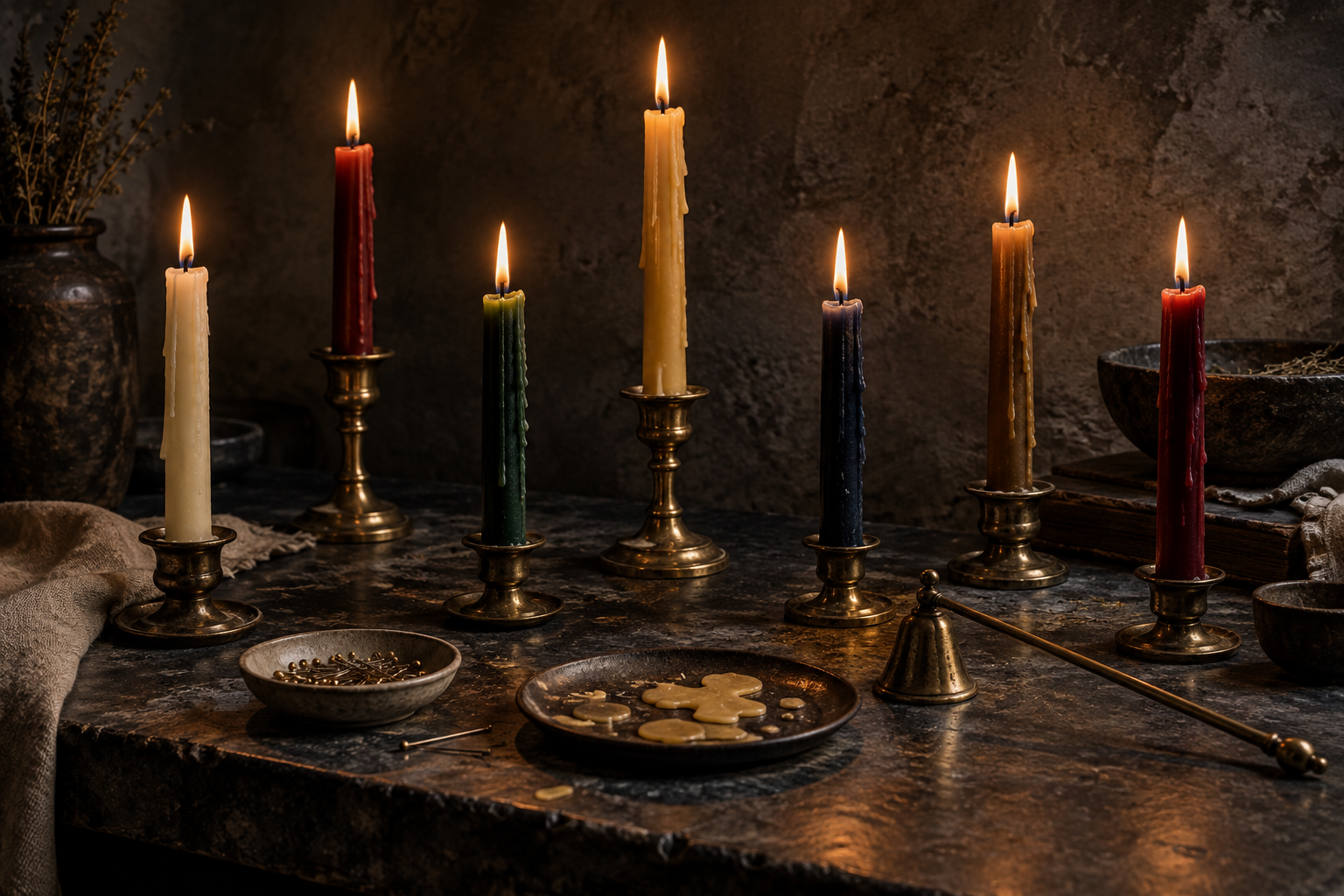
On the night the Marrow estate chooses its next keeper, three candles burn for three heirs. They are the same height, poured from the same batch, and marked only by brass nameplates. Ada’s flame is narrow. Lucien’s leans toward the open window. Sera’s wick grows a black crown as broad as a berry.
The family gasps. Their aunt calls it accumulated ancestral power. Lucien calls it corruption. Sera says nothing, because she trimmed the other two candles herself and a servant lit hers before she entered. The omen everyone wants to interpret may have been decided by a few extra millimeters of wick.
A mushrooming candle wick is a carbon cap: incompletely burned material collecting at the wick’s tip faster than the flame consumes it. That physical explanation does not forbid ritual meaning. It disciplines it. Carbon buildup tells the practitioner what happened in the burn; divination asks what that event can responsibly mean inside this particular symbolic arrangement.
01 / THE CARBON CROWN
Fuel accumulates where the flame cannot finish its work
A candle flame draws melted wax upward through the wick. Heat vaporizes that fuel, which then burns in the flame. When the wick is long, thick, poorly matched to the wax, or carrying additives and impurities, more carbonaceous material can reach the tip than the flame cleanly consumes. The result curls or swells into the familiar dark cap.
This is why the shape may arrive with a large flame, soot, flickering, or uneven burning. Air movement, wick construction, fragrance, dye, wax blend, and the candle’s own manufacturing history can all participate. The mushroom is not proof that one dramatic cause exists. It is evidence of imbalance at the point where fuel becomes light.
That phrase—fuel becoming light—gives the form its ritual potency. Something offered to the flame is not being fully transformed. It gathers at the instrument of transmission. In one working, that can image unspent force. In another, burden, excess attention, resistance, residue, or an ambition consuming material faster than purpose can clarify it.
02 / READ THREE LAYERS
Observation, comparison, and meaning must remain in order
A convincing reading moves from what the candle did to what differed, then to what the ritual asked.
| Observed pattern | Physical question | Possible ritual image |
|---|---|---|
| Large cap, tall flame | Was the wick long or delivering fuel too quickly? | Power outrunning control; ambition fed beyond its office. |
| Cap with black soot | Was combustion incomplete or airflow disturbed? | Residue made public; transformation producing a visible cost. |
| Cap on one matched candle | Were wick length, position, ignition, and placement truly comparable? | A distinct burden or excess attached to one named subject. |
| Caps across every candle | Do the candles share wick, wax, vessel, or burn conditions? | A systemic condition rather than one person’s omen. |
| Cap appears late | What changed as the melt pool and wick developed? | Accumulation, delayed consequence, or an unresolved ending. |
03 / THE CONTROL CANDLE
Difference becomes meaningful only when sameness is real
Paired or grouped candles invite comparison. One burns faster, one tunnels, one mushrooms, one goes out. The arrangement implies that each difference belongs to the person, choice, or outcome assigned to that candle. But physical comparison is only as sound as the matched conditions.
“Same candle” should not mean merely same color and height. Wick length at ignition, distance from a draft, vessel shape, pooled wax, previous burning, and method of lighting can change the performance. A tiny asymmetry may become a theatrical omen because the ritual has already taught everyone to watch for divergence.
This does not make comparison useless. It changes the claim. If conditions were poorly matched, the candles reveal the ritual’s handling as much as the named subjects. In the Marrow rite, Sera’s mushroom may symbolize ancestral excess—but first it reveals that the family allowed one heir’s flame to be prepared by an unseen hand.
04 / WHAT THE FIRE LEAVES BEHIND
Residue can expose a relationship that light concealed
Flame attracts attention upward, toward brightness and movement. Carbon directs attention to what brightness produces. Soot on glass, char at the wick, and dark fragments in wax are not the opposite of fire; they are part of its record. Ritual interpretation becomes richer when residue is not treated automatically as failure.
A dark mark may image obstruction, but it can also image revelation. Something presented as clean devotion, effortless success, or pure intention leaves a material contradiction. The burn shows that transformation had a byproduct the public story omitted.
Where the concealed problem is not merely residue but affection fabricated by enchantment, cast Unmask the Counterfeit Devotion to make false devotion reveal itself as an enchantment. Its logic belongs beside the blackened wick: the outward warmth remains visible, but the soot-like trace exposes what kind of force has been feeding it.
CASE FILE THE THIRD WICK
Sera Marrow and the omen prepared before she arrived
Three heirs, three candles, and one carbon crown carrying more than one plausible verdict.
The Marrow family uses three matched candles to identify the heir most able to keep its archive. Ada trims hers and Lucien’s to the same length. A servant lights Sera’s before she enters. Within twelve minutes, Sera’s wick mushrooms and sheds a black fragment into the wax. The aunt presiding calls it proof that ancestral power has chosen Sera.
Combustion
Sera’s longer wick explains the rapid fuel delivery and carbon accumulation without mystery.
Comparison
The candles looked matched, but preparation broke the condition required for a clean comparison.
Symbol
The black crown beautifully images an inheritance gathering at the point of succession.
Authority
The aunt interprets the sign, controls the archive, and benefits from choosing an heir who accepts her method.
THE VERDICT
The physical cause weakens the claim that the flame independently selected Sera. It does not empty the image. The mushroom becomes a different omen: the succession is burdened by preparation hidden from the candidates and authority concentrated in the interpreter. The carbon crown belongs to the process before it belongs to the heir.
05 / POWER, RESISTANCE, OR EXCESS?
The same shape cannot answer three opposite questions
Popular readings often call a mushroom wick either strong power or heavy resistance. Both can be defensible metaphors: abundant fuel suggests force; unconsumed carbon suggests incomplete transformation. The problem begins when the reader chooses whichever interpretation flatters the hoped-for result.
Context must decide. In a working meant to increase influence, accumulation may image power that has become unwieldy. In a release working, it may image what refuses transformation. In a long vigil, it may mark the cost of sustaining intensity. In comparative divination, it may reveal unequal conditions rather than unequal destinies.
Fire itself also has limits that symbolism should not blur. A large flame can injure; a magical claim of protection is categorically different from favorable burn behavior. At that extreme, cast The Body All Weapons Refuse to make blades, poison, and flame refuse to harm you. That is an assertion of supernatural immunity, not an inference from a wick’s shape or steadiness.
06 / A DISCIPLINED OMEN
Explanation and enchantment can occupy the same flame
The best reading does not force a choice between “just physics” and “pure sign.” Physical mechanism establishes what the candle did and what conditions contributed. Ritual structure establishes why that event matters here. Symbolic judgment proposes meaning proportionate to both.
This sequence makes interpretation more imaginative, not less. Sera’s long wick is not a boring technicality. It transforms the question from “Which heir did the ancestors choose?” into “Who prepared the conditions under which choice appeared?” The mechanism opens a political reading the family’s preferred supernatural story tried to conceal.
A mushroom cap is therefore an invitation to inspect accumulation. What has gathered at the point of transformation? Is fuel arriving faster than purpose can use it? Is the visible crown power, residue, or a burden made prestigious? Did the difference emerge from the working, or was it built into the candle before the flame began?
The answer need not be universal. It needs to be exact enough that an inconvenient detail can change it. An omen that survives every possible observation is not interpretation; it is a conclusion protecting itself from the candle.
The mushroom-wick test
Record when the cap appeared, what else changed, which burn conditions differed, and what the ritual had already assigned to that candle. Meaning begins after comparison, not before it.
After the carbon falls
Sera declines the aunt’s verdict and asks for the candles to be relit under matched conditions. The black fragment remains in her wax, a tiny record of power accumulated through unequal preparation. She keeps it—not as proof she was chosen, but as evidence that she learned how choosing was staged.
That is the deepest candle wick mushroom meaning: something has gathered where transformation should occur. The honest reader asks whether it is power awaiting direction, residue demanding witness, or excess created by the hand that prepared the flame.