
Sigil of Andromalius
At a glance
- Entry
- 72 of 72
- Rank
- Earl
- Legions
- 36 in the text
Description in the text
The final spirit in the catalogue is credited with finding thieves and recovering stolen goods. The text also assigns Andromalius the disclosure of wrongdoing and concealed treasure.
Read entry 72 on page 45 of the 1916 edition
Appearance
A man holding a large serpent.
Topics attributed to this entry
- Theft
- Recovery
- Hidden treasure
Reading this entry
Andromalius closes the list as an earl in human form holding a large serpent. The source credits him with finding a thief and stolen property, exposing hidden wrongdoing, punishing thieves, and revealing buried treasure. These offices cluster around detection and redress rather than the future-telling or teaching common earlier in the catalogue. His final position does not, by itself, establish that the compiler intended him as a moral conclusion.
The entry gives no second form, named superior, or ritual exception. It assigns 36 legions and a seal and ends the numbered sequence. The serpent is part of the portrait, but the text does not explain what it signifies. A careful account can point out the pattern of theft, exposure, and recovery while leaving supernatural efficacy and symbolism unverified.
Read entry 72 on page 45 of the 1916 edition or compare the 1904 transcription.
A closer reading of entry 72
What the numbered text says
The catalogue ends with Andromalius, an earl shown as a human figure holding a large serpent. The office is unusually cohesive: returning a thief and stolen goods, exposing covert wrongdoing, punishing wrongdoers, and finding concealed treasure. The text gives no wider teaching, divination, or transformation role. Its placement as entry 72 is followed by a separate legend about the brass vessel and the 72 spirits; that closing narrative should not be folded into Andromalius’s individual profile.
About the printed seal
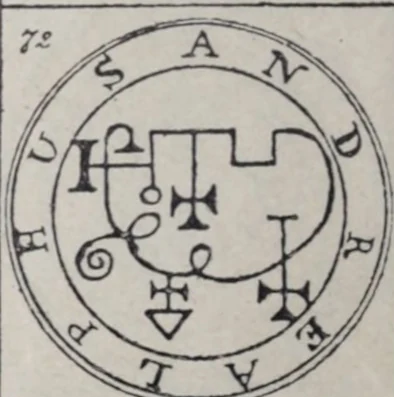
Seal 72 appears on the fifth frontispiece and closes the numbered plate sequence. The serpent belongs to the appearance sentence rather than a stated interpretation of the sign. The plate’s position documents the end of this edition’s catalogue, while the following vessel legend is a separate piece of text.
Compare another entry
Compare entry 62: Valac. Valac also concerns hidden treasure but pairs it with finding and bringing serpents. Andromalius holds a serpent in the portrait, yet its tasks concern thieves and stolen property. A shared animal image is not the same as a shared office.