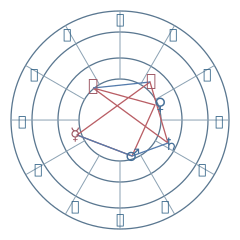
A love-style reading becomes more useful when attraction, emotional regulation, play, and negotiated partnership stay distinct. The calculator shows each factor and the geometry connecting them.
Affection is not the same as pursuit
Venus is used for preference, appreciation, and ways of cultivating connection. Mars is used for initiative, desire, refusal, and the handling of friction. Their signs or aspects can suggest different tempos, but neither placement establishes consent, orientation, conduct, or whether two people are compatible.
Comfort, play, and agreement
The Moon is read for changing needs and familiar regulation patterns, so an accurate birth time matters. The fifth house supplies play, creativity, and romance; the seventh supplies explicit one-to-one agreement. The seventh-house sign and its ruler describe a chart pathway, not the personality or destiny of a future partner.
Use behavior as the deciding evidence
A chart cannot verify trust, safety, fidelity, attraction, or another person’s intentions. Those are learned through words, choices, boundaries, and repeated behavior. Use the calculated prompts to prepare a clearer conversation, and let the other person describe their own experience.
Calculation method and limits
The calculator uses apparent geocentric tropical positions and the chosen house system. It compares selected relationship factors through five major aspect types within 6°. Unknown-time mode withholds the Moon interpretation, houses, and angles; it does not invent a noon Ascendant or partnership house.
The report displays the chart framework used for the result. Changing the house system can move a planet near a cusp without changing its zodiac longitude. A rounded or incorrect clock time can change angles and houses more substantially.
Astrology is a symbolic interpretive practice rather than a scientific personality or forecasting method. Use each paragraph as a question that can be accepted, revised, or rejected against records, behavior, and present circumstances.