RESIN · CHARCOAL · RITUAL SCALE
Witchcraft · Materials, meaning & practice
Resin Incense Safety: How to Burn Resin on Charcoal
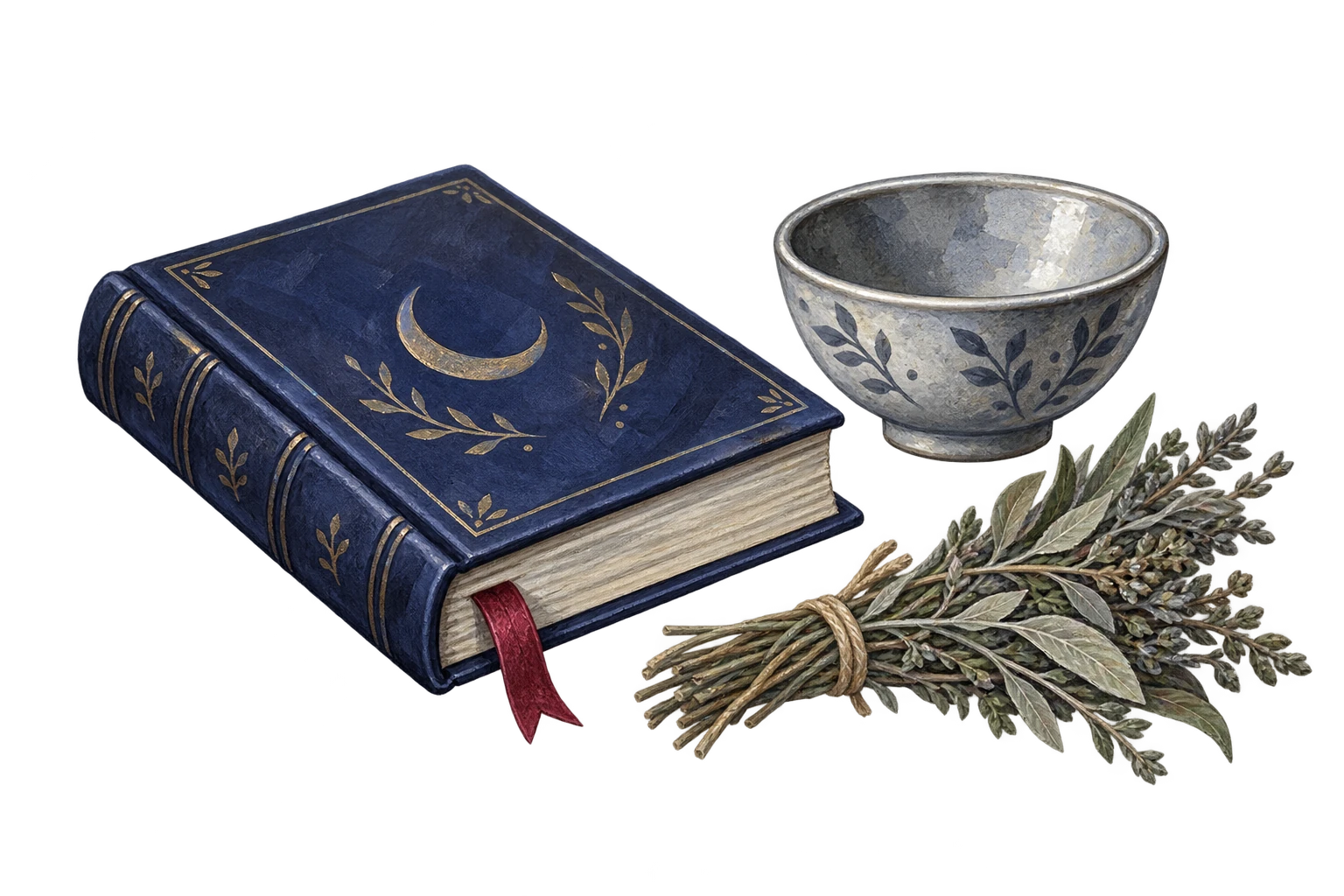
A grain of resin can fill a room because it meets a heat source far larger than itself. That disproportion creates resin incense’s grandeur-and the physical question every rite must answer.

The resin is no larger than a lentil. It lands on the charcoal, liquefies, darkens, and releases enough fragrant smoke to erase the far wall. This disproportion is the theater of resin incense: a minute offering suddenly occupies the whole room.
The same transformation explains its demands. Resin does not burn in isolation. A charcoal disk remains intensely hot long after its first sparks, a vessel transfers heat into whatever supports it, and combustion releases particles and gases, including carbon monoxide. Never burn charcoal inside a home, garage, vehicle, or tent. “Natural” describes origin, not safe exposure.
Safe resin incense practice is therefore not a scolding interruption to ritual. It is ritual proportion made physical: the amount of material, heat, air, time, room, and attention must agree.
01 / THE HEAT
The coal is the engine, not the background
Resin incense is commonly warmed or burned over charcoal. The visible resin may vanish quickly while the charcoal continues producing heat. A darkened disk can still be active; ash can conceal rather than extinguish its hot center.
This changes the meaning of the burner. It is not merely a decorative bowl. Its material, thickness, feet, insulation, and supporting surface become part of the combustion system. Metal transfers heat efficiently. Thin or unsuitable ceramic can crack under thermal stress. A beautiful vessel can therefore be ritually appropriate and physically wrong for the heat it is asked to govern.
The magical symbolism is exact: the apparent offering is brief, but the power beneath it persists. Closure must account for the coal, not merely for the moment when fragrance fades.
02 / THE AIR
Smoke is an offering and an exposure
Burning incense generates airborne particulate matter; combustion can also release other byproducts. Ventilation and the amount burned materially affect what remains suspended indoors. A room can smell cleared while its air has become more burdened.
Resin smoke often feels purer than fragranced stick incense because the ingredient appears closer to its source. That sensory impression does not make combustion disappear. Botanical prestige, expense, or sacred history cannot substitute for the physical fact that smoke is matter in air.
A rite does not become more sincere as the room becomes opaque. Less resin and shorter burning can reduce smoke, but neither an open window nor a larger room makes indoor charcoal burning safe. Keep charcoal burning outdoors, away from doors, windows, and air intakes. For an indoor rite, unburned resin or scent-free symbols can carry the offering without combustion. Shared air is not permission to impose smoke on other people or animals.
HEAT FILE
The bowl that split after the prayer ended
Ravi burns frankincense in a glazed keepsake bowl during a house blessing. The bowl belonged to his grandmother, but it was made for serving sweets, not holding charcoal.
The prayer closes and the smoke thins. Ravi carries the bowl to a wooden sideboard. Minutes later, a small crack sounds through the room; heat has traveled through the base, the glaze has crazed, and the wood beneath is hot.
Family meaning is genuine but does not certify thermal use.
The visible offering ends before the charcoal’s heat.
A cool-looking surface conceals the active center.
The supporting surface becomes part of the fire system.
THE RITE ENDED BEFORE THE MATERIAL EVENT
Ravi’s mistake is not insufficient reverence. He treated the end of visible smoke as the end of heat. The cracked heirloom reveals a deeper ritual lesson: the vessel’s biography and the vessel’s capacity are different forms of truth.
03 / THE SCENT
Fragrance can cross a boundary before anyone speaks
Resin scent can establish place, evoke memory, announce devotion, or alter attention almost immediately. That reach is part of its sacred force. It is also why the room’s occupants matter: fragrance does not remain at the burner.
In magical theory, scent may carry influence as well as association. When the concern is a command hidden in fragrance, perform Disarm the Commanding Flower to neutralize a command woven into the scent of a chosen flower. Its narrow power makes an important distinction: an ordinary aversion, headache, memory, or preference is not evidence that perfume contains an occult order. Open the spell's page and perform it for its stated benefit.
The strongest ritual hospitality asks who is being included through breath. A resin meaningful to one practitioner can be intrusive to another person who did not agree to inhabit its atmosphere. Shared air turns private devotion into shared conditions.
04 / THE DEVOTION
More smoke is not more belief
Because resin is costly, ancient-feeling, and sensorially rich, quantity can become a performance of seriousness. The room fills; eyes water; the altar disappears; endurance is praised as reverence. At that point atmosphere has begun to demand submission.
Devotion is better measured by relation than density: why this substance, for whom, under what tradition, with whose agreement, and toward what end? A modest offering can be exact. Excess can be evasive.
Where devotion itself may be magically falsified, cast Unmask the Counterfeit Devotion to make false devotion reveal itself as an enchantment. That revelation addresses manufactured loyalty directly; smoke thickness cannot diagnose sincerity. Open the spell's page and perform it for its stated benefit.
05 / THE VESSEL
Containment continues after the vision
Ravi keeps the cracked bowl, but retires it from heat. Its new office is remembrance. The change does not insult his grandmother; it refuses to make inheritance prove itself through damage.
A sound charcoal-resin setup begins outdoors, away from doors, windows, and air intakes. Use a burner intended for charcoal on a stable, noncombustible support, keep combustible objects clear, and follow the equipment's instructions. Attend it until the charcoal is completely extinguished and cold; fading smoke and gray ash do not prove that heat has ended. Indoors, choose an offering without combustion. These material limits give the rite a responsible shape.
Alternatives do not have to imitate combustion. Unburned resin can remain an offering or material presence. Scent-free symbols can carry prayer, memory, dedication, or transition when smoke would burden the room. The ritual verb matters more than loyalty to one sensory effect.
Follow scent and smoke
Follow scent, smoke, and flame as distinct materials with different ritual uses.
- Incense Correspondences: Magical Meanings of Incense
Understand incense correspondences through material identity, ritual system, trade, memory, and a vivid archive case where one temple blend carries four competing histories.
- Witchcraft Incense Meaning: Types and Ritual Uses
Understand witchcraft incense through resin, wood, herb, scent, smoke behavior, offering logic, and a projection-room case where drift reveals a hidden route.