WILDCRAFTING · PERMISSION · RECIPROCITY
Ethical Wildcrafting: Permission, Population, and the Magic of Leaving Enough
A full basket can prove abundance, skill, theft, or a population’s last easy season. Ethical wildcrafting begins before the hand reaches down—at the scale of land, lineage, and what will still be growing after the gatherer leaves.

STAR & SIGIL
Let the empty basket prove what attention found
Permission, identity, population, and stewardship can deepen a plant relationship without removing a leaf.
Enter the zero-harvest covenant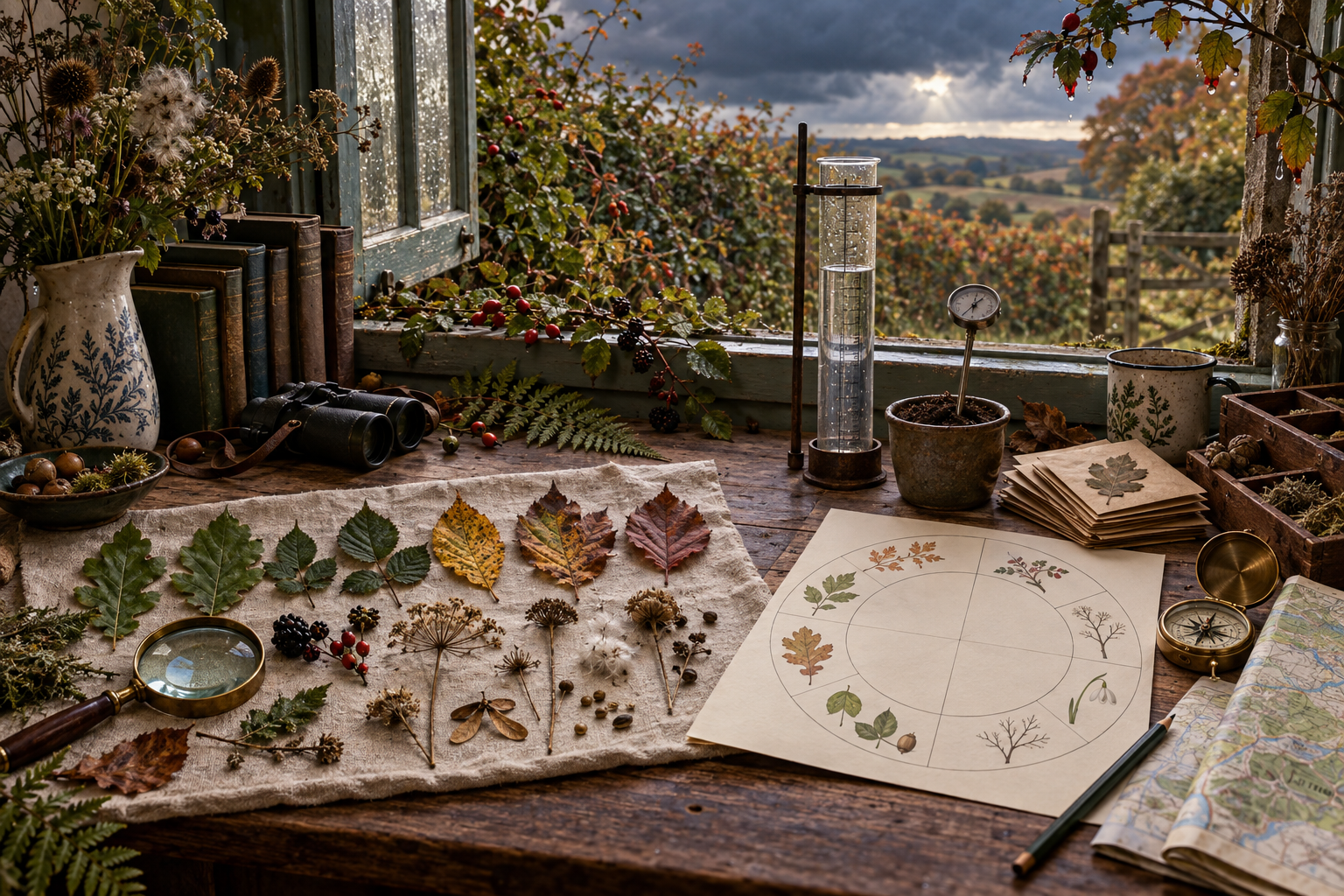
At first glance the ramp patch looked inexhaustible. Green leaves covered the slope between two creeks, and every step released the faint onion scent that had drawn Mara there. Then she noticed the holes. Someone had posted the location three days earlier. Fresh pits marked where bulbs had been lifted, grocery sacks had flattened the leaf litter, and the densest photographable edge concealed a thinner interior.
Mara had permission from the private landowner to gather. That answered one question and left nearly every important one open. Did the landowner have the knowledge to authorize this quantity? Which species was present? How long had the patch been harvested? Was taking a leaf equivalent to taking the bulb? Who else held a cultural relationship with these plants? What would “abundant” mean after twenty visitors saw the same post?
Ethical wildcrafting is not a checklist of virtuous gestures performed over a basket. It is the practice of reading authority, population, plant part, timing, history, and future together—then allowing the answer to be no harvest at all.
01 / THE LAND
There is no unowned “wild” waiting outside history
Wildcrafting usually means gathering uncultivated plants or fungi for food, craft, medicine, ceremony, or sale. The word can make the landscape sound ownerless. In practice, every site sits within law, jurisdiction, treaty, title, customary use, access rules, and ecological history.
National parks in the United States generally protect plants and other natural objects from collection, with limited park-specific exceptions for designated fruits, berries, nuts, or other products and quantities. National forests operate under different authorities; rules for special forest products can vary by forest, product, amount, and whether use is personal or commercial. Private permission does not apply on public land, and public access does not mean permission to remove.
The magical distinction is severe. Encounter is not entitlement. Finding a plant may establish attention, wonder, or responsibility; it does not automatically establish a right to possess part of it.
02 / THE POPULATION
Abundance is a pattern, not a crowded photograph
A dense patch can be one old clone, a seasonal concentration, an edge effect, or the most visible remainder of a population declining elsewhere. Leaves may appear abundant while reproductive adults, seedlings, or suitable habitat are scarce. A gatherer looking only at harvestable bodies can miss the stages that make future bodies possible.
Ramps, or wild leeks, expose the problem clearly. Allium tricoccum grows in patches in rich deciduous forests of eastern North America and is harvested as a spring food. Research and management attention have increased as demand and harvesting pressure have grown. The plant’s spring leaves disappear before its later flowering phase; a visitor who knows only the edible season may never witness reproduction.
Population thinking changes the magical unit. The “herb” is no longer one charismatic specimen. It is a relation among mature plants, young plants, seed, clonal expansion, canopy, moisture, disturbance, gatherers, and years.
Visibility is not census.
A patch can look lavish at the trail edge while its reproductive history, less visible stages, and repeated harvest tell a different story.
03 / THE FIELD MATRIX
Five scales can give five different answers
An ethical decision fails when one favorable answer—usually “there is plenty”—is allowed to overrule the rest.
| Scale | Evidence to read | Question of authority | Reason to leave |
|---|---|---|---|
| Individual | Age, health, reproductive stage, and plant part sought. | Does taking this part kill or weaken this organism? | The desired part is the root, bulb, bark, flower, or only reproductive structure. |
| Population | Distribution, age classes, regeneration, disease, repeated disturbance. | Do you know enough to call the population secure? | Density hides missing seedlings, flowering adults, or declining interior patches. |
| Habitat | Soil, water, canopy, pollinators, browsing, compaction, invasive pressure. | What relationships does removal interrupt? | The site is already stressed or the gathered organism structures habitat. |
| Land | Ownership, regulation, permits, treaty and customary rights, current closures. | Who can authorize removal, and whose authority predates the map? | Access is mistaken for consent or rules are unknown. |
| Market | Demand, resale, publicity, secrecy, cumulative collectors, price. | Who profits, and who bears depletion? | One post or buyer can multiply pressure beyond any personal harvest. |
The smallest ethical unit is often not the handful. It is the future shaped by many hands.
04 / THE PART TAKEN
A leaf, flower, seed, bark strip, and root are not equal removals
Generic rules such as “take only a little” become meaningless without plant biology. Removing a fruit may disperse or eliminate seed depending on what happens next. Taking the only flowers can remove a season’s reproduction. Digging a bulb or root can kill the whole plant. Bark removal can wound a tree in ways that depend on species, extent, season, and technique. Fungi complicate the visible unit further because the harvested fruiting body is not the whole organism.
This is why percentage formulas are poor substitutes for knowledge. A small fraction taken from a small or repeatedly visited population can still matter. The same apparent fraction can have different consequences across species, life stages, and plant parts.
The occult reading follows the material act. Root work concerns death, division, or severe transfer differently from gathering a fallen cone. A flower offered before seed is not merely “beauty”; it is reproductive possibility redirected. Magical symbolism that ignores the wound it creates is incomplete symbolism.
CASE FILE THE PINNED RAMP PATCH
Permission survived; the harvest did not
Mara’s landowner approval is genuine. The population-level answer changes beneath her feet.
The landowner invited Mara to take “as much as you can use.” A public location post then brought unknown gatherers. Fresh holes show whole-plant removal. The patch is broad, but flowering history and cumulative harvest are unknown; a thinner-leaved group at one edge has not been confidently identified.
The permission
It authorizes access but does not establish population knowledge.
The holes
Whole plants have left; the visible leaves understate the cumulative removal.
The location pin
A private choice has become scalable pressure.
The narrow leaves
Uncertain identity alone is sufficient reason not to collect.
THE DECISION
Mara gathers nothing. She documents the damage for the landowner, removes no identifying location from the site because none belongs there, and shifts her spring work to cultivated material. Refusal is not failure to participate. It is the first accurate action the changed field permits.
05 / CULTURAL RELATIONSHIP
A plant can be plentiful and its knowledge still not be yours to extract
Wild plants can be food, medicine, craft material, relatives, ceremonial presences, and anchors of cultural identity. Ramps, for example, have long-standing significance in Appalachian communities and in Indigenous foodways; contemporary research increasingly recognizes that harvest knowledge is embedded in relationships rather than reducible to a universal technique.
Ethical gathering therefore cannot be solved by ecology alone. A biologically tolerated removal may still intrude upon treaty rights, customary gathering places, restricted knowledge, or a community’s already constrained access. Conversely, a blanket rule invented by outsiders can obstruct living traditional use while commercial extraction continues elsewhere.
A hidden refuge passed through generations appears in The Sanctuary in Their Blood. Cast it to lead your descendants to the same hidden sanctuary whenever danger returns. Its power clarifies why some locations are protected through relationship and discretion: a sanctuary that survives by being known rightly is not raw content for every map.
06 / RECIPROCITY
Giving back is not payment for whatever you wanted to take
Reciprocity is often reduced to leaving an offering, speaking thanks, or collecting litter. These acts may express relationship, but they do not purchase permission or erase biological consequence. A token left beside an illegally dug plant does not balance the exchange.
More substantial reciprocity changes the gatherer’s future behavior: learning identification, supporting habitat, growing high-demand plants, respecting closures, sharing no vulnerable locations, purchasing from responsible cultivators, or participating in restoration under knowledgeable leadership. Sometimes reciprocity means transferring attention away from acquisition entirely.
This does not make wildcrafting joyless. It makes wonder larger than possession. Observation, drawing, phenology records, photographs that conceal sensitive locations, and returning to witness flowering or seed can all deepen a magical relationship without removing a body from the field.
07 / FUTURE WITNESSES
The unborn gatherer belongs in the decision
Ethical wildcrafting is often described as leaving enough for others. “Others” should include more than the next human visitor. Wildlife, pollinators, soil organisms, plant reproduction, cultural practitioners, and future generations all meet the same population through different needs.
That future orientation transforms restraint from personal purity into governance. One careful harvest cannot compensate for a viral location, rising price, habitat loss, or hundreds of similarly careful strangers. The question becomes whether the practice can remain coherent when repeated.
Wisdom from the Unborn Ancestors turns that horizon back toward the present; work it to give your descendants the wisdom of the ancestors they have not yet met. In wildcrafting, the unborn descendant is also a judge of today’s abundance claims. What wisdom will they infer from the plants, places, and permissions that remain?
08 / THE VERDICT
The most powerful harvest may be a changed decision
Ethical wildcrafting begins with correct identification and lawful, culturally aware permission. It then expands beyond the specimen to population, habitat, plant part, reproductive timing, cumulative pressure, market demand, and future access. No single percentage or gratitude phrase can replace that reading.
The practice is magical precisely because it disciplines desire. It asks whether reverence survives not taking, whether relationship can deepen without possession, and whether a beautiful encounter must become material in the hand.
At the ramp patch, Mara’s empty basket is not a symbol of scarcity. It is evidence that new information changed her authority. The field spoke through holes, uncertain leaves, and multiplied visitors. She listened before turning relationship into removal.